

Quality Foam Boards
Foam Board
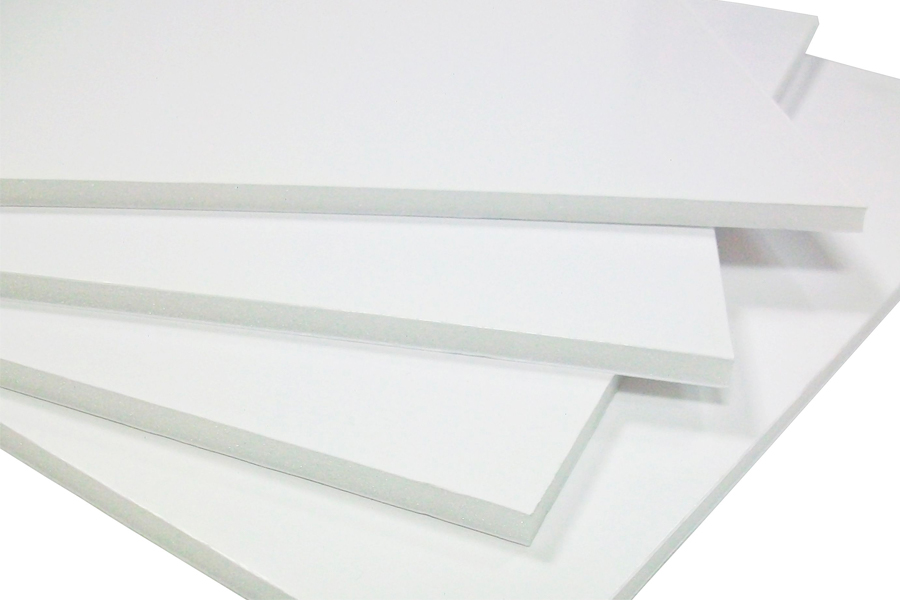
Foam board, also commonly known as foam core or foam core board, is a lightweight and rigid material composed of a foam center sandwiched between two layers of paper or thin materials. Its light weight and flat faces make it useful for suitable indoor displays and craft projects. Typically, craftsmen and makers prefer it as it is easy to cut and shape, making it a popular choice for many types of DIY craft and hobby projects. Related uses include mounting and displaying artwork and photographs, creating signs, displays and backdrops and making model prototypes. Paper-faced foam board should be kept dry. Moisture and rough handling can damage its faces, core or edges.
Properties
Foam board is valued for light weight and easy handling in indoor displays, crafts and models. Paper-faced board is not a weatherproof or load-bearing material. Cost and durability depend on the actual board and project.
Lightweight
Foam board is one of the lighter board materials, making it easy to handle and transport.
Rigid
Despite its lightweight nature, foam board is quite rigid and can hold its shape well in the hands of a skilled maker.
Easy to cut
Foam board is relatively easy to cut using a sharp knife or blade, making it easy to shape and trim to size.
Easy to glue
Use an adhesive compatible with the board faces and foam core. Some solvents or hot adhesives can damage the material; test a small offcut first.


Uses
Foam board is a versatile material that can be used for a wide range of purposes such as displaying artwork and photographs, creating signs and displays for events, making prototypes for product design and architecture, and in craft and hobby projects. It is also used in advertising and marketing for creating point-of-purchase displays and promotional signs. Additionally, it is frequently utilized in educational settings for creating visual aids and teaching materials like displays, charts, and diagrams.
Mounting artwork
Foam board is often used to mount and display artwork, photographs, and other flat items. It is easy to cut and shape, and it can be glued to a variety of surfaces, including walls, easels, and presentation boards.
Creating displays
Foam board is a popular choice for creating signs, displays, and backdrops for events, trade shows, and exhibitions. It is easy to cut, glue, and shape into various sizes and shapes, and it is lightweight and easy to transport.
Making model prototypes
Foam board is often used to make model prototypes for a variety of purposes, including product design, architecture, and engineering. It is easy to cut and shape into precise sizes and shapes, and it can be painted or covered with other materials to create a more realistic appearance.
Crafting and hobbies
Foam board is a popular choice for many types of craft and hobby projects, such as scrapbooking, cardmaking, and paper modeling. It is easy to cut, shape, and glue, and it can be used to create a wide range of decorative and functional items.
Advertising and marketing
Foam board is often used for advertising and marketing purposes, such as creating point-of-purchase displays, promotional signs, and trade show graphics.
Education and training
Foam board is often used in educational and training settings to create displays, charts, and diagrams. It is a lightweight and easy-to-use material that can be used to create visual aids and teaching aids.
Choosing Foam Board for a Display
For a classroom model or temporary sign, consider the finished size, face colour and how the board will be supported. Paper-faced foam board is best kept indoors and dry. Transport it flat and protect the corners; a lightweight board can still crease or dent. Test the planned adhesive on an offcut rather than assuming every glue is compatible with the foam.
Original photographs or valuable artwork need preservation materials rather than an assumption that ordinary display board is archival. The Library of Congress guidance on preservation matting and framing explains why mounting materials must be chemically stable.
For a more substantial painted display component, compare MDF boards; for a wood-based frame, review timber. These materials serve different purposes, so include the display size, duration, finish and support arrangement in your enquiry.
Foam Board: Scale Models and Display Cutting
Foam board dimensions are especially useful when translating a drawing into a scale model or planning repeated display panels. At 1:50 scale, each 50 mm in the real object becomes 1 mm in the model. The table gives calculated examples, not recommended sheet sizes or a statement of available thicknesses. Confirm the actual paper-faced board and cutting dimensions before ordering.
Translate real dimensions into a model
At the example 1:50 scale, a 3,000 mm wall becomes 60 mm in the model. The two drawings are schematic rather than a common-scale comparison.
Illustrative calculation inputs; diagram not to scale.
| Real dimension | Calculation | Model dimension |
|---|---|---|
| 3,000 mm wall height | 3,000 ÷ 50 | 60 mm |
| 900 mm door width | 900 ÷ 50 | 18 mm |
| 150 mm wall thickness | 150 ÷ 50 | 3 mm |
| 250 mm wall thickness | 250 ÷ 50 | 5 mm |
Thickness Changes the Model Geometry
A 5 mm model wall represents 250 mm at this scale; it does not represent every wall simply because 5 mm board is convenient. Decide whether the model shows outside dimensions, inside clear dimensions or the centreline of walls. Where two wall pieces butt together, subtract the adjoining board thickness from the relevant cutting dimension. A nominal 100 mm internal opening between two 5 mm walls would require 110 mm overall, before adhesive and any dimensional variation.
Arrange repeated display pieces
One three-column, two-row arrangement produces six 300 × 200 mm pieces. The coloured remainder is available for other cuts; trimming and blade losses are excluded.
Illustrative calculation inputs; diagram not to scale.
Plan Repeated Display Pieces
For an illustrative 1,000 × 700 mm board, six 300 × 200 mm pieces can be arranged as three columns and two rows. Their finished area is 0.36 m² against a sheet area of 0.70 m², approximately 51.4% yield. This is one layout rather than a maximum-yield claim. It excludes trimming, blade losses and damaged edges; another orientation or a mixed cutting list may use the remainder more effectively.
Use multiple controlled knife passes on a protected cutting surface and test the adhesive on an offcut. Keep display tolerances realistic: crushed corners and paper-face damage can make a mathematically correct piece unsuitable. Original artwork needs conservation materials and reversible mounting methods; Library of Congress mounting guidance provides relevant background. Ask about the supplied board’s composition instead of treating paper-faced foam board and plastic foam sheets as interchangeable. Include scale, finished dimensions and required face colour in the enquiry.
Frequently Asked Questions
What is foam board made of? | Foam board has a foam center sandwiched between two layers of paper or thin material, making it lightweight and rigid. |
Is foam board easy to cut and shape? | Use a suitable tool and an adhesive compatible with the board faces and core. Test an offcut first; some adhesives can damage foam. |
What is foam board commonly used for? | It's commonly used for mounting artwork, creating event displays and signs, and building model prototypes. |
Is foam board suitable for outdoor signage? | Paper-faced foam board is primarily for dry indoor displays. Do not assume it is weatherproof or suitable for outdoor signage. |
Do you supply foam board for educational displays? | Yes, foam board is a popular choice for classroom visual aids, charts, and teaching diagrams. |